
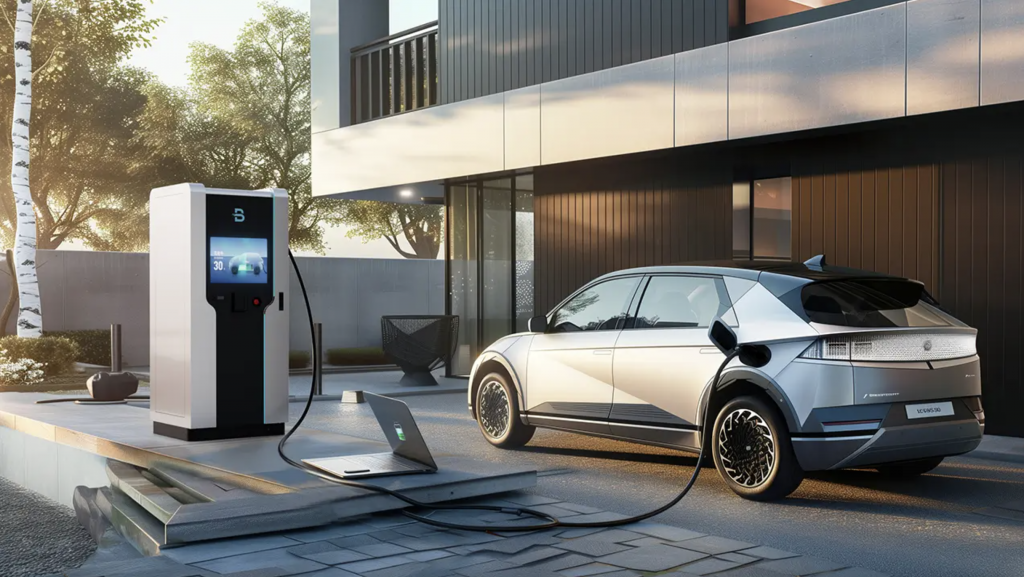
Bidirectional Charging (V2H) 2026: Is the Breakthrough Finally Coming?
Protection Against Storms and Severe Weather: What Your Solar Insurance Must Cover
It sounds like something from the future: not only charging your electric car, but feeding the electricity back into your home when needed. In 2026, this concept is moving much closer to reality — and many tech enthusiasts are wondering whether the technology is finally ready for the mass market. Bidirectional charging – typically implemented through a bidirectional charging wallbox – promises a completely new role for the EV: it becomes a mobile home battery.
But how far along is Germany really, and which vehicles already support Vehicle-to-Home (V2H) in Germany?
How Does V2H Work — and Why Is It So Interesting?
Vehicle-to-Home (V2H) allows the battery of an electric vehicle to be used as an energy storage system for the home. The car stores electricity, for example from a PV system, and feeds it back into the house during the evening or during grid peaks. This relieves the public grid, increases self-sufficiency and can help reduce household energy costs.
In the ideal scenario, the EV replaces a traditional home battery — or complements it in a meaningful way.
Combined with solar power, the potential becomes enormous: the car charges at low cost or even for free during the day, then powers the house at night. Suddenly, the idea of a fully renewable household becomes tangible.
Which Wallboxes Support Bidirectional Charging?
The market for compatible chargers is growing, but in 2026 the selection is still limited. A bidirectional charging wallbox must be able to do much more than a standard charger: it needs an integrated inverter or a compatible control system to safely send electricity in both directions.
Typical features of a V2H-compatible wallbox include:
- reverse feeding capability into the home grid
- safe disconnection from the public grid
- communication via ISO 15118
- an energy management system for load control
- PV optimisation for maximum self-consumption
For tech-savvy homeowners, this means: V2H devices are more advanced, more expensive — but significantly more flexible. In 2026, several new models will enter the market, installation will become easier, and manufacturers such as Nissan, BYD and Hyundai are opening up their systems more broadly.
V2H-Compatible Vehicles 2026: These Models Lead the Market
The number of electric cars capable of bidirectional charging is finally growing. Under V2H-capable cars 2026, most come from Asian manufacturers, though several European brands are now following.
Already established are:
- Nissan Leaf & Ariya
- Hyundai Ioniq 5 / Ioniq 6
- Kia EV6 and EV9
- BYD models with Blade Battery
- Mitsubishi Outlander PHEV (new generation)
For many new vehicles, V2H is enabled directly from the factory or unlocked via software updates. This marks a decisive shift toward market readiness — for years, the hardware existed but software restrictions held the technology back.
What Does German Regulation Say?
The biggest barrier for Vehicle-to-Home in Germany has not been the technology — but the regulation. Grid operators required clear rules for safe reverse feeding. From 2025/2026, these conditions are changing:
- the smart meter rollout provides the technical basis for controlled bidirectional electricity flows,
- new VDE guidelines define safety requirements for bidirectional systems.
This makes V2H not only technically feasible but formally permissible — at least for self-consumption within the home.
Vehicle-to-Grid (V2G), meaning feed-in into the public grid, remains more tightly regulated, but is also progressing step by step.
This article is for informational purposes only and does not constitute a binding offer. The content does not replace personalised consultation. For an individual assessment or a tailored offer, we recommend scheduling a personal advisory meeting.