
Dynamic Electricity Tariffs and Battery Storage – The Perfect Duo

Give the Gift of Independence: Why Now Is the Best Time to Plan for Spring
Solar technology is currently advancing at an impressive pace. Take bifacial solar modules, for example: they capture sunlight from both sides, resulting in significantly higher energy yields — there’s a lot of potential there. And then there are perovskite cells, especially in tandem designs. They could greatly increase the efficiency of solar modules and open up entirely new business opportunities. Combined with smart systems and further innovations, the solar energy market is becoming broader and more efficient than ever before. The potential is truly enormous.
Bifacial Modules: More Power Through Light From Both Sides
How they work: These modules are glass-coated on both the front and back, allowing them to capture both direct sunlight and reflected light — resulting in more efficient power generation.
Advantages: Depending on the surface and installation method, they can produce 5–30% higher energy yields compared to conventional modules. This means more output and better land-use efficiency.
Applications: Bifacial modules are particularly economical on highly reflective surfaces — for example, white roofs, bright gravel, or snowy regions. In such environments, they can fully unleash their potential, offering clear added value for companies and investors.
Perovskite Cells: The Next Big Thing in the Solar Sector
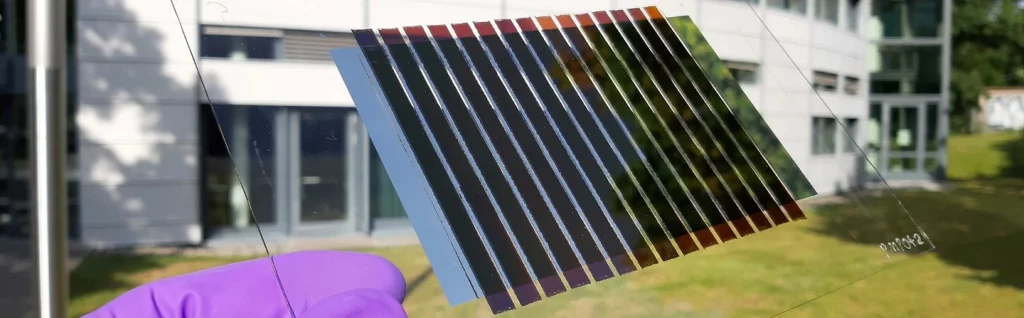
Let’s be honest: anyone ignoring developments in perovskite solar cells is missing out. These modules — especially in tandem with silicon — already achieve efficiencies beyond the 30% mark. Traditional silicon cells can hardly keep up, making this a true game changer for the industry.
As for versatility: thanks to thin-film technology, perovskite cells open up completely new possibilities. They can be used flexibly — for example, on foils or integrated directly into building facades. This creates brand-new business fields, from architecture to consumer goods.
Of course, the technology is still under development. But the potential for future generations of highly efficient and flexible solar modules is enormous. Those who invest now could secure a significant competitive advantage.
Further Developments and Outlook
Artificial intelligence and so-called smart grids are elevating energy management to a new level. These technologies optimize the efficiency of solar installations and offer tangible benefits to companies and investors.
Innovative application fields such as agrivoltaics — PV systems installed on agricultural land — and floating solar systems are opening new markets and creating additional opportunities for sustainable energy production.
From an economic perspective, the case for the latest technologies is strong: production costs continue to decrease while yields rise. Bifacial modules — and in the future, perovskite applications — are becoming especially attractive solutions for profitable and future-proof solar energy use.
This article is for general informational purposes only and does not constitute a binding offer. The content presented does not replace individual consultation. For a concrete offer or personal assessment, we recommend scheduling a direct consultation.