

Dynamic Electricity Tariffs and Battery Storage – The Perfect Duo

Give the Gift of Independence: Why Now Is the Best Time to Plan for Spring
Before installing a solar system on a tiled roof, it is essential to first carefully check the roof’s load-bearing capacity. The roof must reliably withstand additional stresses from snow and wind – there is no room for compromise. The roof’s orientation also plays a crucial role, as it significantly affects the solar system’s output.
When installing roof hooks, precise and careful work is required to avoid damaging the tiles and to ensure the long-term stability of the entire system. Adequate ventilation of the module frame should also be ensured; otherwise, the efficiency and lifespan of the solar modules may suffer. Sealing the installation components, especially the roof hooks, effectively protects the building from moisture ingress. Finally, professional consultation is recommended, and all manufacturer instructions should be strictly followed to ensure safety and installation efficiency.
Preparation and Planning – Steps You Should Not Skip
- Structural check:
Before installing a solar system on a tiled roof, it is strongly recommended to verify the roof’s load-bearing capacity through a professional assessment. This ensures that the additional weight of the modules does not overload the roof. - Roof orientation and slope:
A south-facing roof with a slope of about 30 to 45 degrees is ideal, as this provides the highest energy yield. Shadows from trees, neighboring buildings, or other obstacles should be avoided, as they can significantly reduce system efficiency. - Mounting system:
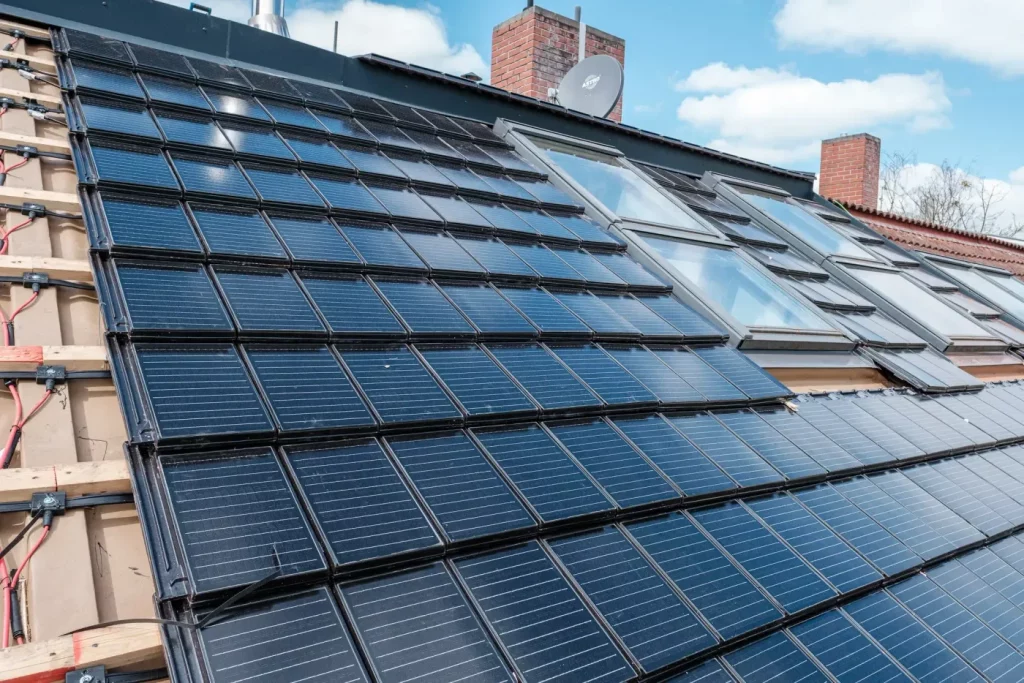
The choice of an appropriate mounting system for photovoltaic roof tiles depends largely on the type of roof. Different roof types – such as tiled roofs, metal roofs, or flat roofs – require specific fastening solutions to ensure the secure and durable attachment of solar modules.
Installation of Roof Hooks – A Brief Overview
- First, carefully remove the roof tiles at the locations where the roof hooks will later be installed. This must be done with particular care to avoid damaging the tiles.
- Next, the roof hooks are positioned directly on the rafters. It is important to maintain an appropriate distance between the hooks and the tiles to prevent stress and potential breakage.
- Finally, the U-shaped roof hooks are screwed in and guided along the lower edge of the roof tile. Proper attachment of the solar modules is essential to ensure the stability and longevity of the entire structure.
Completion & Maintenance
- When it comes to sealing, there is no room for compromise. Especially at the fastening points, professional and completely watertight execution is mandatory. Cutting corners here risks costly moisture damage to the building – something nobody wants.
- Distance from the roof surface: A minimum of 10 centimeters between the modules and the roof is standard. This protects the modules from overheating, which in turn preserves efficiency and the overall economic performance of the system.
- Maintenance and safety must never be neglected. It is recommended to plan generous maintenance access around the system. This keeps cables and connections easily reachable and ensures safe working conditions on the roof.
- Finally, manufacturer instructions should never be ignored. Only by strictly following the installation and maintenance guidelines can you fully claim warranty and service rights. A careful review of the documentation always pays off.
“Our experts know everything about your roof type. Contact us.”
This article is intended for informational purposes only and does not constitute a binding offer or professional advice.