

Dynamic Electricity Tariffs and Battery Storage – The Perfect Duo

Give the Gift of Independence: Why Now Is the Best Time to Plan for Spring
Many families considering a solar system have doubts about winter. Does the sun shine enough? Does a system deliver measurable performance during the cold season? That’s why it’s worth looking at real photovoltaic winter experiences and the yield data for 2026. Modern systems show that although winter months have fewer hours of sunlight, they are far from being “powerless.”
How Much Electricity Does a PV System Generate in Winter?
Photovoltaic yield in winter depends strongly on temperature, sunlight, and the angle of inclination. Surprisingly for many, cold temperatures actually improve module performance because they operate more efficiently than in midsummer. At a typical location in Germany, a well-planned system can generate around 10–15% of its annual production between December and February.
In practice, sunny winter days often produce higher instantaneous output than expected. A key factor is having unobstructed, shade-free modules. As soon as the panels receive direct light, the production rises noticeably.
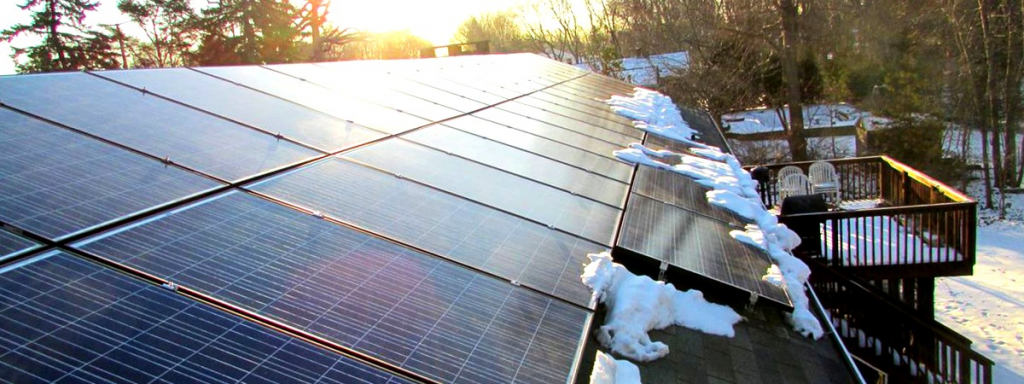
What Does Snow Mean for a Solar System?
Many people ask how a solar system handles snow and whether snow loads can block operation. A thin layer of snow usually melts quickly, as even low levels of UV radiation warm the modules. Heavy snowfall can cause short-term production pauses — this is normal and already accounted for, since winter only contributes a limited share of the annual yield.
Structural safety is essential. Snow load requirements for solar modules in Germany are standardized, and systems are designed to withstand regional snow loads without issues. In particularly snowy regions, installers recommend reinforced mounting systems or a steeper tilt angle to help snow slide off more easily.
Experiences and Real Data from 2026
Evaluations from various system operators show that modern PV installations deliver continuous power even during short winter days. For south-facing systems, sunny days in February can reach more than 70% of summer performance. The key is the combination of high efficiency and low module temperatures. Families who share their PV winter experiences often report pleasant surprises: lower output than in summer, but far more than expected.
Those using a battery storage system can balance consumption peaks and bridge short phases of so-called “dark doldrums.” This keeps self-consumption high even when sunshine is minimal.
Tips for Reliable PV Operation in Winter
With a few measures, winter performance can be stabilized and further optimized:
- regular visual checks after heavy snowfall,
- optimal module tilt for faster snow runoff,
- avoidance of shading from trees or nearby structures,
- using a battery storage system to smooth consumption peaks,
- high-quality modules with strong low-light performance.
These steps ensure that the system operates reliably even during the quiet season.
Conclusion: Photovoltaics Are Worthwhile Even in Winter
The notion that solar systems produce nothing in winter is a myth. Real data from 2026 clearly shows: a well-planned PV system remains a stable and valuable energy source even in the cold season. With the right components, awareness of snow load requirements, and a storage system, families stay independent, flexible, and financially relieved in the long term.
This article is intended solely for general information and does not constitute a binding offer. The content presented does not replace individual consultation. For a specific quote or personal assessment, we recommend scheduling a direct consultation.