
Dynamic Electricity Tariffs and Battery Storage – The Perfect Duo

Give the Gift of Independence: Why Now Is the Best Time to Plan for Spring
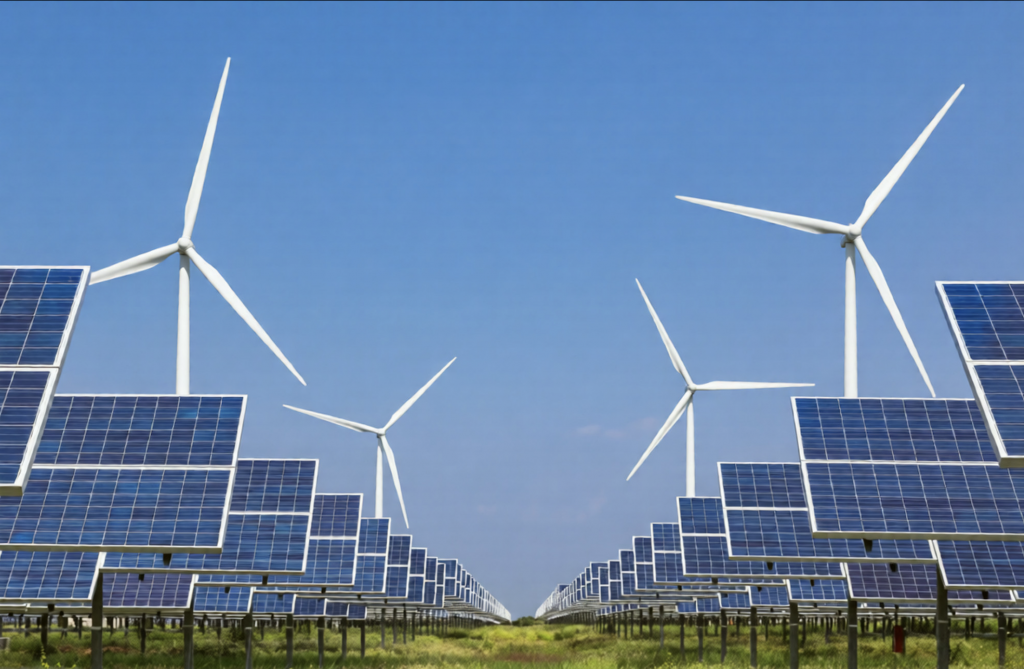
The market for large-scale PV systems in Germany is growing faster than ever. Companies in industry, logistics, and agriculture are increasingly investing in scalable photovoltaic solutions to stabilize energy costs and achieve long-term independence. At the same time, this sends a strong signal to customers, partners, and investors: sustainability is now an economic factor, not a trend. Large solar power plants offer exactly the combination of efficiency, brand value, and predictable returns that is becoming increasingly important in the German B2B sector.
Why Industrial Solar Systems Are Attractive for Businesses
For many companies, energy demand is a major cost driver. Industrial solar systems make it possible to use large rooftops, open areas, or conversion sites efficiently. Production facilities, logistics centers, and larger agricultural operations particularly benefit from this because they have sufficient space and can use the generated electricity directly within their operations. The higher output of such systems ensures that investments pay off significantly faster compared to smaller installations.
Companies that rely on photovoltaics strengthen their energy security. Independent of short-term price fluctuations, they receive a predictable energy source — an advantage that has an immediate impact in energy-intensive industries.
Models: Self-Consumption, Full Feed-In, and Direct Marketing
Large PV projects today are mainly planned according to three business models:
- Self-consumption. The generated electricity is used directly by the company. This option is particularly attractive for businesses with high daytime consumption. It immediately reduces electricity costs and improves internal energy efficiency.
- Full feed-in. All electricity is fed into the grid. Companies or investors generate secure revenues through the legally guaranteed EEG remuneration. In this case, the system serves purely as an investment asset.
- Direct marketing. Electricity is sold at market prices to energy traders. This model is becoming increasingly popular for large solar parks because it can deliver higher returns when market prices exceed EEG rates.
This flexibility makes it significantly easier to build and operate solar parks economically — both for own sites and as investment projects.
System Sizes, Construction Times, and Profitability in Germany
Large installations often start at 500 kWp and reach into the double-digit megawatt range. Industrial or logistics rooftops typically allow for systems between 1 and 3 MWp, while ground-mounted plants can easily reach 10 MWp or more. Expansion is now much faster: well-prepared projects usually take only 6–12 months from planning to commissioning.
Key factors for profitability include:
- the specific yield in the region (900–1200 kWh/kWp),
- investment costs, which decrease significantly per kWp for large projects,
- stable revenues from self-consumption or energy sales,
- tax benefits and depreciation options.
Investors view solar investments in Germany as a long-term, secure form of capital. High electricity prices shorten the payback period of many projects to seven to nine years, while the systems themselves have a technical service life of more than 25 years.
Why Now Is the Right Time for Large PV Projects
German companies are under pressure to optimize energy costs and produce more sustainably. Large-scale solar plants create a reliable basis for the coming years: they provide predictable energy, strengthen competitiveness, and increase the overall sustainability of operations. For investors, they offer a stable, growing market segment with long-term, secure returns.
This article is for general informational purposes only and does not constitute a binding offer. The information presented does not replace individual advice. For a specific quotation or personal assessment, we recommend scheduling a direct consultation.
This article is for general informational purposes only and does not constitute a binding offer. The information presented does not replace individual advice. For a specific quotation or personal assessment, we recommend scheduling a direct consultation.